| 1. The structure
of crystals
If you do not see a menu on the left, please, use this link. |
![]() |
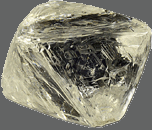
![]() Diamond (pure carbon) |
![]() Quartz (silicon dioxide)
|
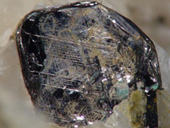
![]() Scapolite (aluminium silicate) |
![]() Pyrite (iron sulphide) |
|
Other excellent
images of minerals can
be found through this link.
|
![]() |
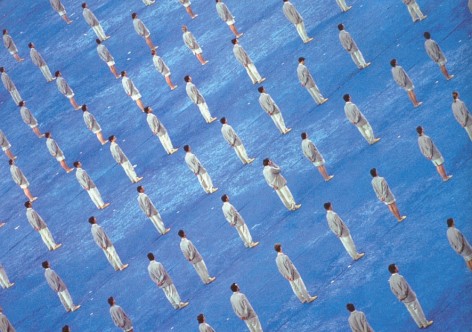
The crystalline
state of matter is the state with the highest order, ie, with very high
internal correlations and at the greatest distance range. This
is reflected in their properties: anisotropic and discontinuous.
Crystals
usually appear as unadulterated, homogenous and with well-defined
geometric shapes (habits) when they are well-formed.
However, as we say in Spanish, "the habit does not make the
monk" (clothes do not make the man) and their external morphology is
not sufficient to evaluate the
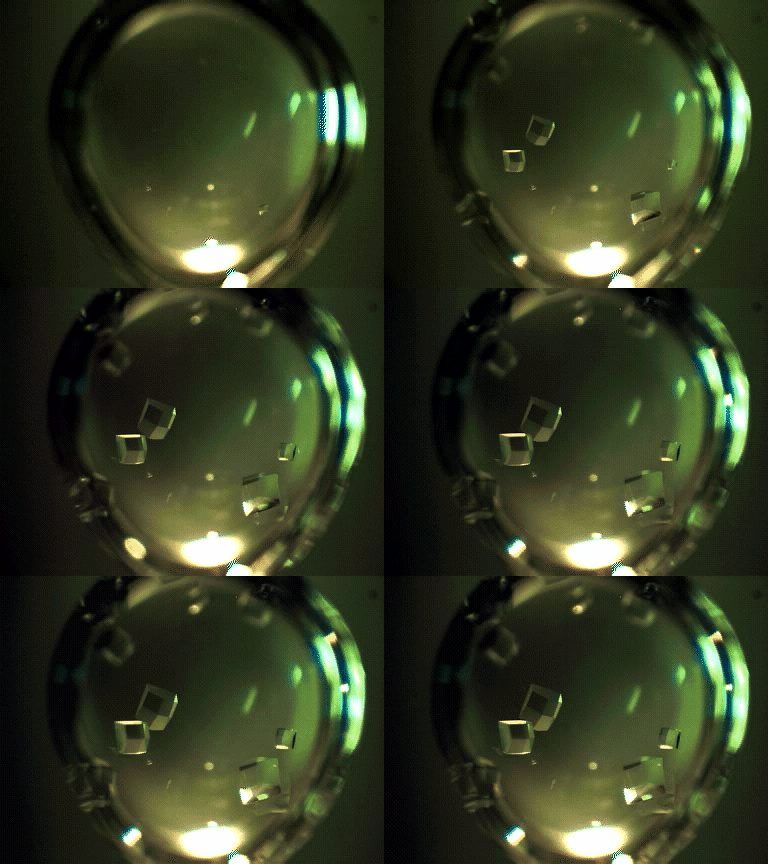
crystallinity of a material. The film on the left box shows the process of crystal growth of lysozyme (a very stable enzyme) from an aqueous medium. The duration of the real process, that takes a few seconds on your screen, corresponds approximately to 30 minutes. The original film can be found on the website that offers George M. Sheldrick. |
![]() |
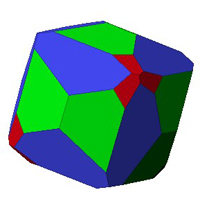
The figure on the left shows a representation of the faces of
a given crystal. If you have installed Java
Runtime, clicking on the image will open a new
window
and you will be able to turn this object.
Other Java pop-ups of faces and forms (habits) for ideal crystals can be obtained through this link. |
![]() |
|
![]() |
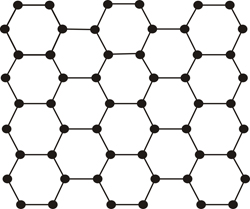
![]() Atomic model of an ordered material (crystal) |
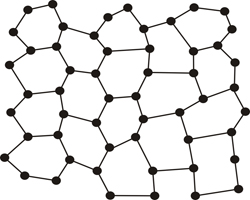
![]() Atomic model of glass (an amorphous material) |
|
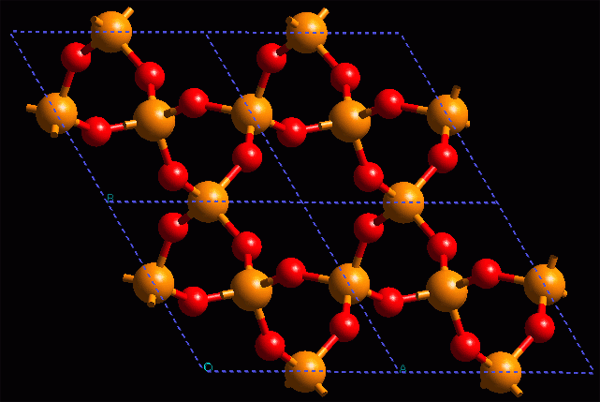
Crystal structure of an inorganic material: α-quartz |
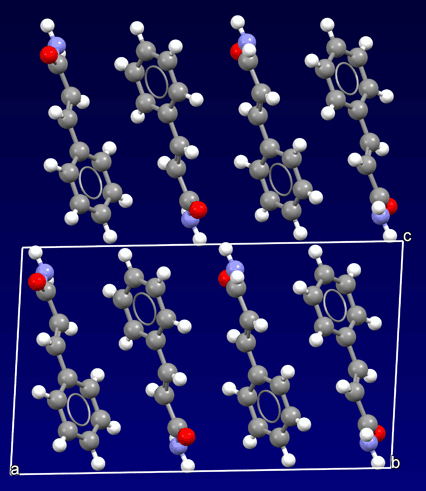
Crystal structure of an organic material: cinnamide |
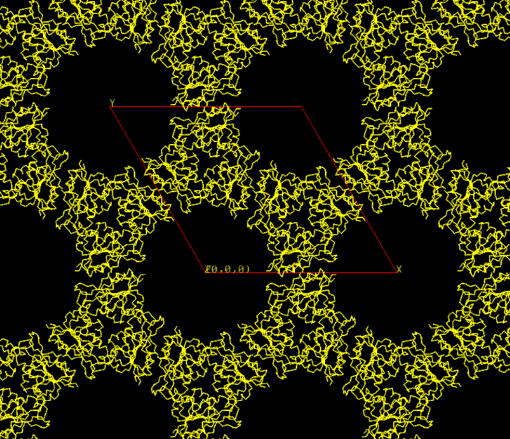
Crystal structure of a protein: AtHal3. The molecular packing produces very large holes. |
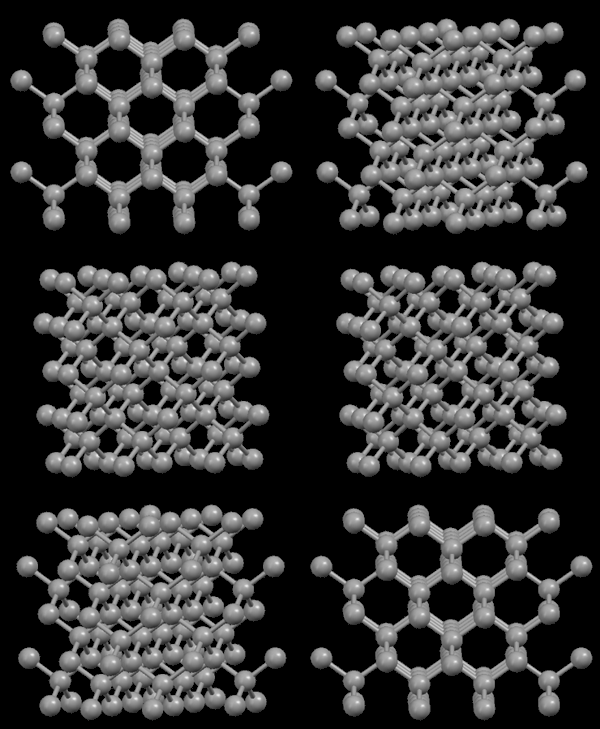
![]() Diamond (pure carbon) |
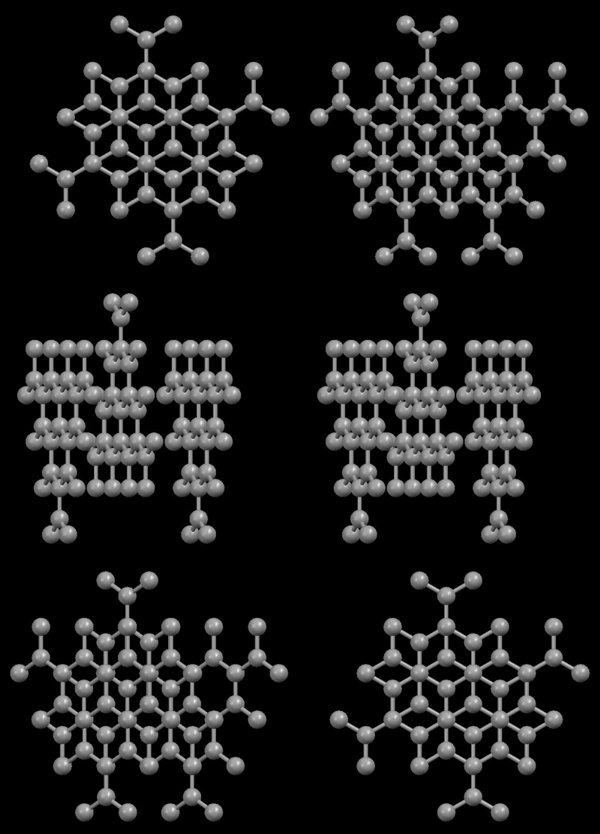
![]() Graphite (pure carbon) |
Diamond, with a very compact structure |
Graphite, showing its layered crystal structure |
In the diamond structure, each carbon atom is linked to four other ones in the form of a very compact three-dimensional network (covalent crystals), hence its extreme hardness and its property as an electric insulator. However, in the graphite structure, the carbon atoms are arranged in parallel layers much more separated than the atoms in a single layer. Due to these weak links between the atomic layers of graphite, the layers can slide, without much effort, and hence graphite's suitability as a lubricant, its use for pens and as an electrical conductor.
And speaking about conductors... The metal atoms in the metallic crystals are structured in such a way that some delocalized electrons give cohesion to the crystals and are responsible for their electrical properties.
A slightly different treatment deserve the so-called quasicrystals...
A
quasicrystal is an "ordered" structure, but not perfectly periodic as
the crystals are. The repeating patterns (sets of atoms, etc.) of
the quasicrystalline materials can fill all available space
continuously, but they do not display an exact repetition by
translation. And, as far as symmetry is concerned, while crystals
(according to the laws of classical crystallography) can
display axes of rotation of order 2, 3, 4 and 6 only, the
quasicrystals show other rotational symmetry axes, as for example of
order 10.
In these pages we will not pay attention to the case of quasicrystals and simply refer the interested reader to a
link, where Steffen Weber, in a relatively simple way, describes these
types of materials from the theoretical point of view, and where some additional sources of information can also be found.
The Nobel Prize in Chemistry 2011 was awarded to Daniel Shechtman by the discovery of quasicrystals in 1984.
There are obviously many questions that the reader will ask, having come this far, and one of the most obvious ones is: how do we know the structure of crystals? This question, and others, will be answered in other chapters of these pages and therefore we encourage you to consult them!
|
|
|
|